
By Eric Franklin
Fort Hood Public Affairs
FORT HOOD, Texas -A minefield can stop an advancing Army unit in its tracks, but new developing technology could help Soldiers safely clear a path from afar.
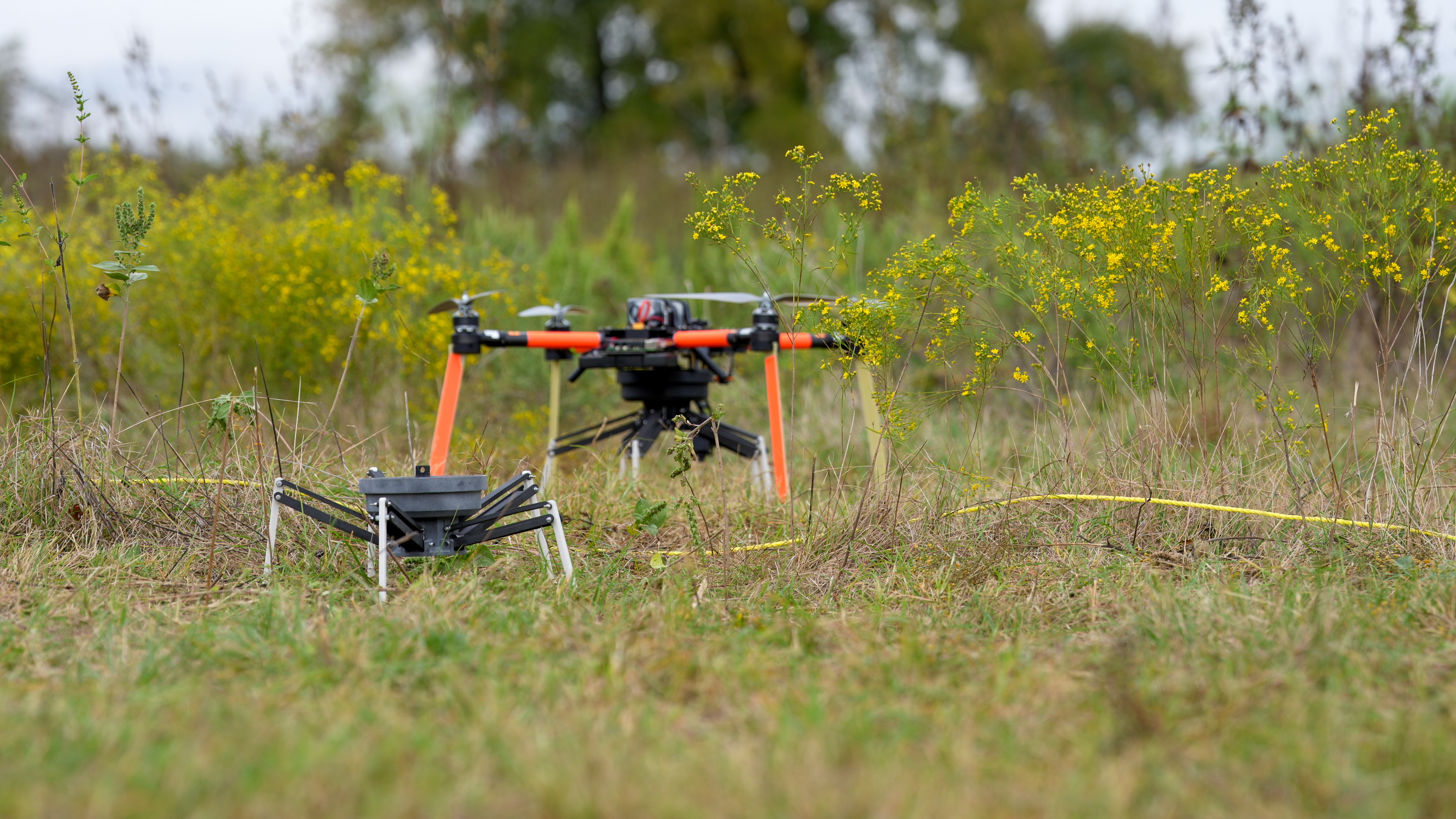
Soldiers from the 8th Engineer Battalion, 1st Cavalry Division Engineer Brigade are testing new technology, that includes unmanned aircraft systems (commonly known as drones) and robotic equipment, whichcould help combat engineers open safe lanes through battlefield obstacles while reducing Soldiers’ exposure to explosive hazards.
For Pfc. Wesley Glanton, a combat engineer assigned to 8th Engineer Battalion, 1st Cavalry Division Engineer Brigade, the purpose of his job is straightforward.
The most important part, he said, is to “make sure your fellow troops are able to get through an obstacle.”
That responsibility is helping drive development of the Army’s XM123 Autonomous Breaching System (ABS), technology intended to help combat engineers find and deal with explosive hazards from a greater distance.
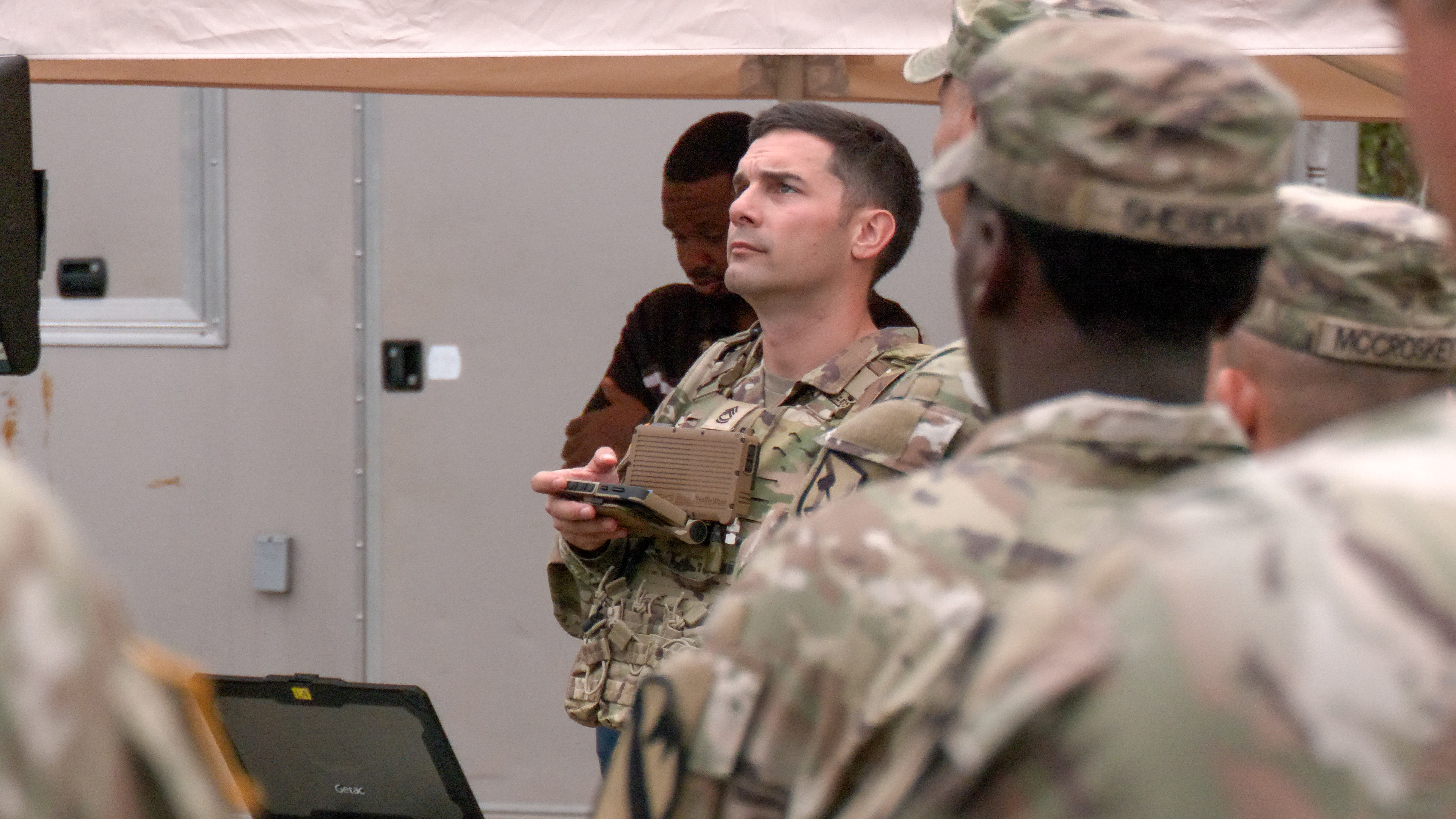
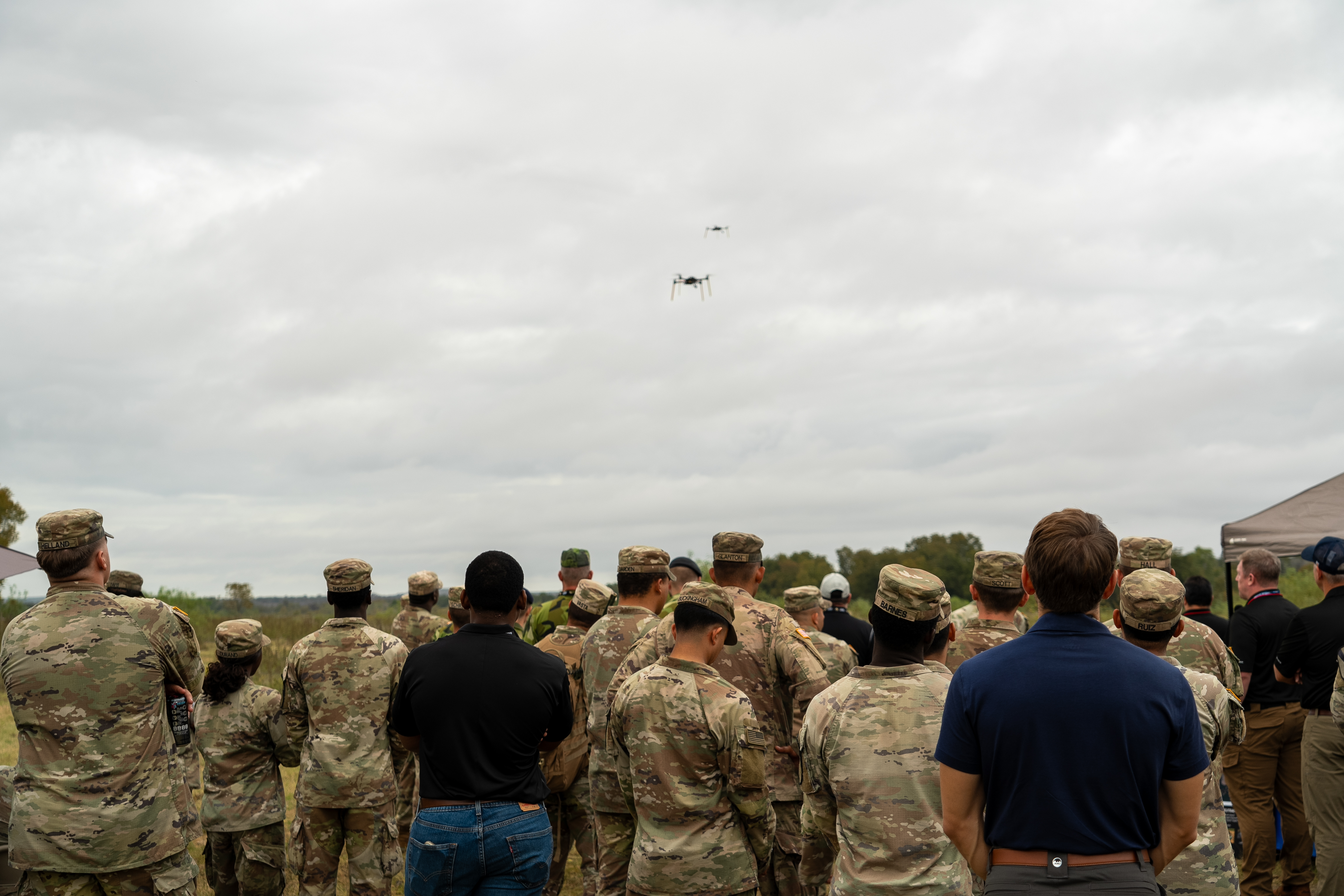
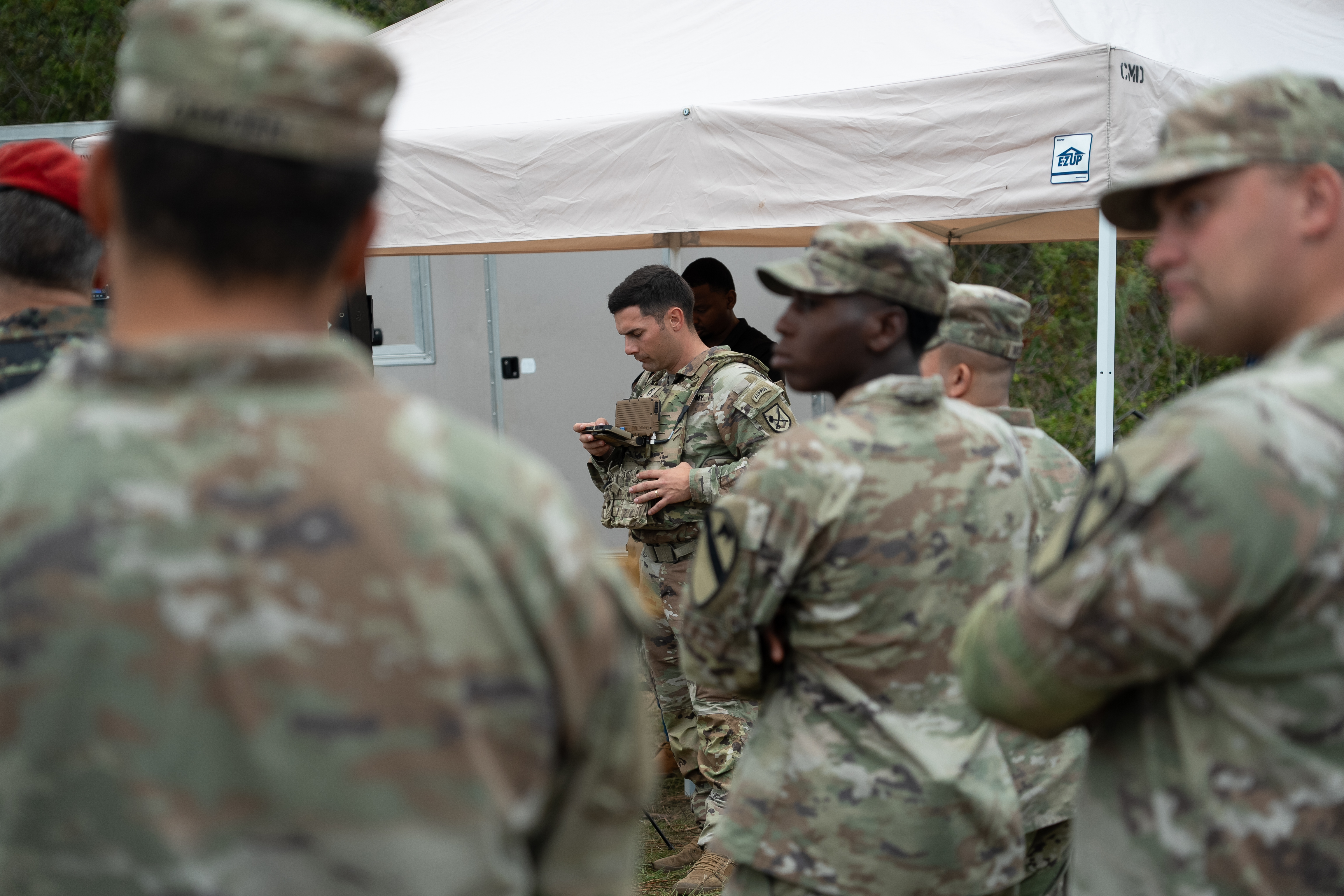
During an Oct. 29 demonstration known as Touch Point 5, industry partners presented different approaches to develop the XM123 ABS concept, using drones and other equipment to address dangerous battlefield obstacles.
The event gave Soldiers, Army leaders and program officials an opportunity to examine technologies being developed for future breaching missions.
Spc. Cole Thomas, a combat engineer assigned to 8th Eng. Bn., 1st Cav. Div. Eng. Bde., said he was interested in seeing the different designs and approaches companies were exploring.
For Thomas, the potential value was about more than the equipment itself.
“Machines and equipment can be replaced,” Thomas said. “Human lives cannot.”
That concern is central to the program.
Phil Lawson, deputy product manager for Terrain Shaping Obstacles, said the Army partnered with industry to develop equipment that could perform dangerous tasks from farther away.
Lawson described a nine-month effort that took different concepts from ideas on paper to demonstrations of emerging technology.
“Each vendor, in their own way, came up with a different concept,” Lawson said.
The approaches include drones and sensors intended to help locate possible explosive hazards, computer software being developed to recognize suspicious objects and unmanned equipment designed to deal with those threats from a distance.
XM123 isn’t a finished system, but these demonstrations help determine what works, where improvements are needed and whether the equipment can perform reliably during military operations. The stakes extend beyond the combat engineers doing the work. Infantry Soldiers, tanks and other vehicles may be waiting to advance, and delays can affect the larger mission.
Lt. Col. Philip Kistler, deputy commanding officer of the 1st Cav. Div. Eng. Bde., said the demonstration is part of a larger effort to reduce the number of Soldiers exposed to danger during breaching operations.
He also emphasized new technology must prove its value. That means evaluating more than whether a drone can operate during a demonstration.
“We need to be thorough with our taxpayer dollars and make sure that these technologies can demonstrate the capabilities that they are advertising,” Kistler said.
The Soldiers who may eventually use the equipment also have a role in that process.
When asked what combat engineers wanted from the technology, Lawson pointed to “ease of employment,” or how easily Soldiers could use the equipment during a mission.
“Soldiers today, they want to leverage the technology to get out to the problem set,” Lawson said.
He explained drones and software used to plan missions could help simplify breaching tasks while allowing Soldiers to remain farther from explosive hazards.
Kistler said cooperation with allied militaries is also important. Different countries bring their own experience and ideas about unmanned systems, which could help shape how future equipment is developed and used together.
The goal is to give Soldiers better tools without removing human judgment from the decisions that matter.
Gen. Christopher LaNeve, the Army’s vice chief of staff, recently said, “Technology doesn’t fight; Soldiers do.”
Soldiers and commanders will remain responsible for overseeing how these systems are employed.
For now, XM123 is in development. Information gathered during evaluations will be used to improve the technology and determine how different components might eventually work together.
For Glanton, Thomas and other combat engineers, the mission remains the same: get fellow Soldiers through dangerous obstacles and keep them moving.
What could change is how close they must get to danger to do it.
Click below for b-roll


